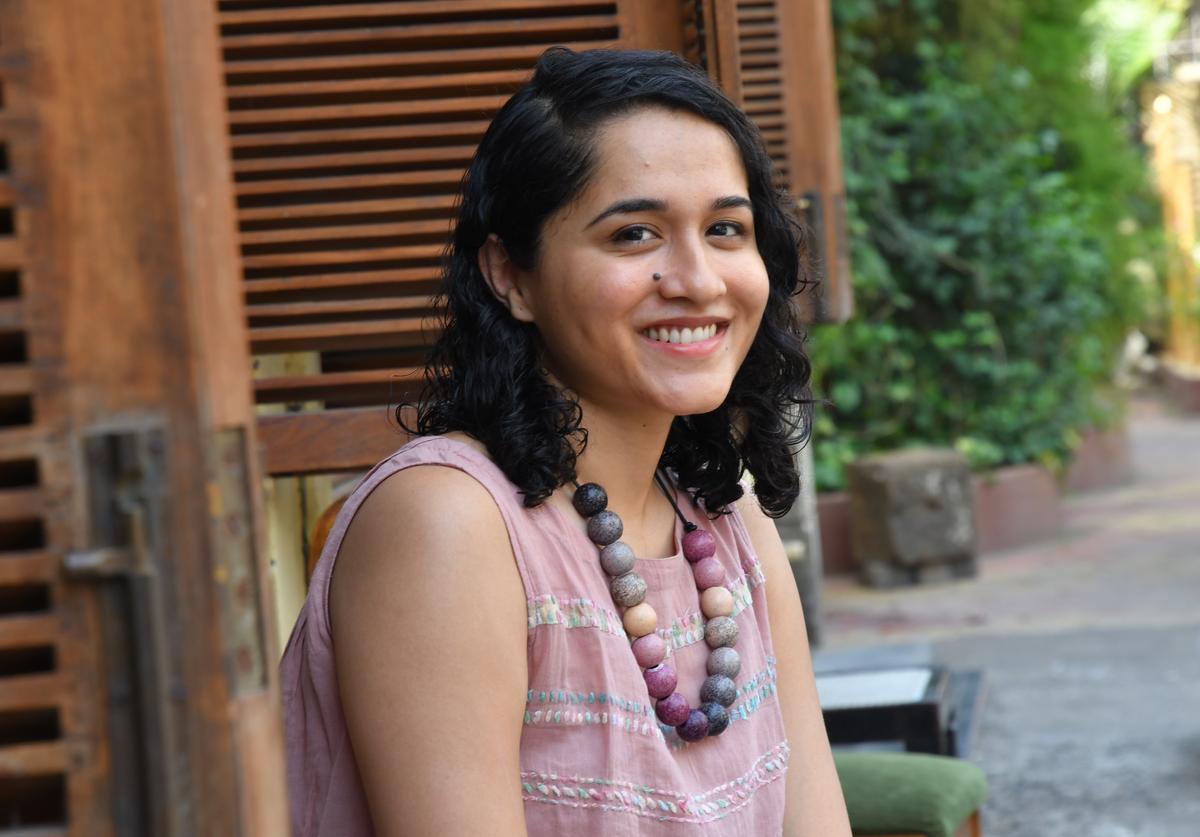
”If I had known that one day we all have to retell our stories, that we are compelled to return to the past to parcel out the weight of our actions across many versions of ourselves, I might have done many things differently. ” – Amrita Mahale, Real Life
Amrita Mahale’s Real Life is literary fiction wrapped in mystery, set against the picturesque Mahamaya Valley in the Himalayas. Tara, a microbiologist, is last seen there, before she disappears without leaving a trace. Her childhood friend Mansi, stifled in an unhappy marriage, answers the whispers of the mountains to investigate.
While on a lookout for her friend, Mansi reminisces about their once-rosy dynamic that turned complicated due to their individuality. Then there's Bhaskar, whose hyperfixation on Tara makes him a prime suspect during the police procedure.
Through intertwined lives and messy, hazy narratives, Bhaskar and Mansi try to assemble a jigsaw puzzle threatening to expand with the addition of a new piece.
”Strong women don't grow from trees, they grow from girls like you and me.”
I must agree that initially I had difficulty sinking my teeth into these chapters, since I was not used to reading longer ones. But after some segments vividly describing Mansi's deteriorating marriage with Sid, my ears perked up.
”My work, as unglamorous as it was, was my second skin. The financial independence it gave me was my armour.”
The prose is delicate and explores many themes that make for an immersive reading experience. The book portrays female friendship, class inequality, marriage woes and influx of AI. The first section is atmospheric, tracing a timeline of longing with quiet intensity. The second segment, unfolding through Bhaskar's perspective, is a well-researched lesson on artificial intelligence’s pros and (mainly) pitfalls.
Mahale switches from vividly depicting Tara Kumar's conflicted thoughts to psychologically deducing the mind of a man with a fragile ego. She speaks the characters’ language and voices their intentions effectively.
Real Life seamlessly blends feminism and female friendship with other persisting issues that plague the world at large. For instance, there's an ongoing debate about AI replacing humans, which Mahale has subtly commented on.
”He had happily outsourced these tedious functions to his smartphone—to his AI overlords as Tara had once put it. In Jora, where none of the mountain trails was on Google Maps, he was powerless.”
Some parts of Mahale's writing reminded me of Jissa Jose's work Mudritha where the mystery of the missing woman is a lesson in gender roles and societal expectations.
Through Mansi's point of view, we travel along the hairpin curve of Jora, taking in the sights and smells. The wildlife biologist’s role is succinctly described in a sentence—to distill facts about animals and how they live, facts that are essential to protecting these species and their habitats. The gurgling Mahamaya river acts as more than a mute spectator, with buried secrets on its shores and within it.
”Our Mahamaya is a silent witness, and sometimes a ruthless accomplice, to the most heinous acts.”
Real Life by Amrita Mahale isn't a work to be critiqued, but rather quietly contemplated for its rich prose. Its visceral quality lingers long after the pages are turned. The book poses an important question to readers—what remains when certainty disappears?
Stay in the niche. There's more where this came from on our newsletter...subscribe now.