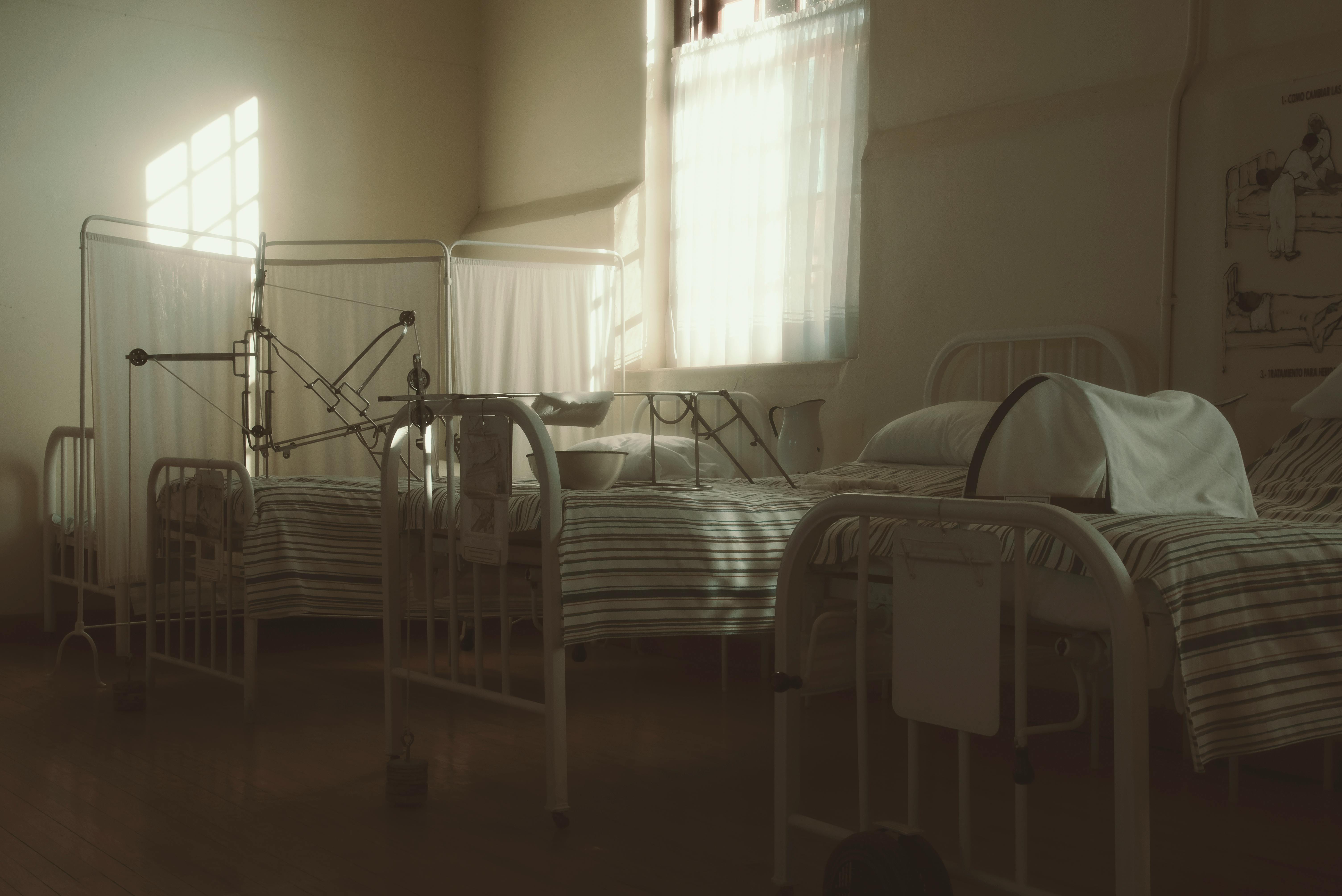
I am often struck by my own naivety. In my old journal entries I wrote about my pain, the soreness in my joints, the world spinning, and the feeling of pressure building behind my eyes. In the end I still managed to write: “I can't wait to reread this when my life is without pain, to look back at these moments where it overwhelmed me with a small sad smile.” It's funny, almost. It's funny how obvious my hope was, the faith that I had in a broken system, a system that wishes not for accurate diagnosis, but a confirmation of female hysterics.
The doctor walks into the small office with a profound sense of urgency, as usual. The appointment was only booked for fifteen minutes, a shockingly low number even without her need to make it go by faster. She hurriedly types my information into the computer, she doesn’t need to ask. She tells me, “Make it quick. I'm booked back to back today,” and I turn my head to the clock. It is almost noon, 3 hours after my appointment was set to begin. I can't imagine a time when she doesn’t look like she has somewhere else to be. The regular “Hello, how are you, and what brings you in today” comes out in one hurried breath. I start to tell her about my symptoms, the presyncope, the fatigue, the aching in my joints. Her mouth moves to speak before I can even finish. She writes me a requisition for a blood test and walks out of the room. I've gotten three blood tests in the past two months, all of which have yielded the same results.
The legacies of female hysteria persist into the modern field of medicine, especially as a young woman. The Victorian view of women and their health was a matter of how ‘difficult’ they were to an outsider, thus creating a pathologized view of femininity and women's pain. Any ounce of complaint or seeking of help was pathologized as a ‘woman's disease’ and made out to be the natural state of a woman. By the 19th century, every known human illness was attributed to hysteria in women, including those with symptoms that were physical and chronic. This dismissal bleeds into doctor's offices with modern tools and diagnoses, and pain is dismissed as a mental deficiency, not an ailment of the body.
I won't sit here and tell you that I'm some kind of hero with an incurable mystery illness. I won't try to say that I live my life in an unyielding agony, waiting to be saved and healed. It's more a small yet continuous pain that never seems to relent. I find myself sitting in medical waiting rooms far too often. I sit waiting for chiropractors, acupuncturists, and countless specialists, surrounded by people with hair long past the salt-and-pepper stage. I wait in line for the hospital's MRI, listening to rhythmic beeps, with the stinging scent of hand sanitizer wafting up my nose. I drive to the next city over to get a CT scan. More often than not, I have bottles and bags with any and all over-the-counter medications you can imagine. Ibuprofen, acetaminophen, menthol throat lozenges, Dimenhydrinate tablets, and a chocolate bar and crackers. I constantly experiment with combinations of different sugar and salt intakes. Maybe more water. More exercise. A variety of supplements. What will lead to actual change?
After I leave my doctor's office I do as I am told. I once again watch as the blood from my left arm fills up a few small vials. I return two weeks later to that exam room, results in hand. “Your blood work seems normal,” she says. “Maybe you’re anxious about something, these symptoms could be all in your head. Here's a referral to a psychologist.”
The beautiful daughter of Ajax, Cassandra, was given the gift of knowledge and prophecy by Apollo, only to be cursed to never be heard. Instead of being gifted the power of prophecy, you are gifted the power to know your own body. In both cases you aren't listened to. Sitting in your bedroom or at a dining table or lecture hall, with the feeling of knowing something is wrong but without the knowledge that someone with a medical degree should be eager to provide. You make jokes to your friends to catch you when you pass out, and expect some laughs or nods of agreement. Instead you get looks of concern, and a warning to take action. You look to professionals, wailing about your own personal Trojan War, hoping that this is when the enigma of your body will be solved. It's a cycle of hope that repeats itself over and over, always ending in disappointment.
I try to tell my doctor no, that this isn't a matter of insanity. But, she has already assured herself that there's nothing more worth looking into. And I feel like a Victorian woman being prescribed life by the sea for a broken bone. I think of the next months of waiting before this cycle of explanations begins again. And again. And again.
Stay in the niche. There's more where this came from on our newsletter...subscribe now.